

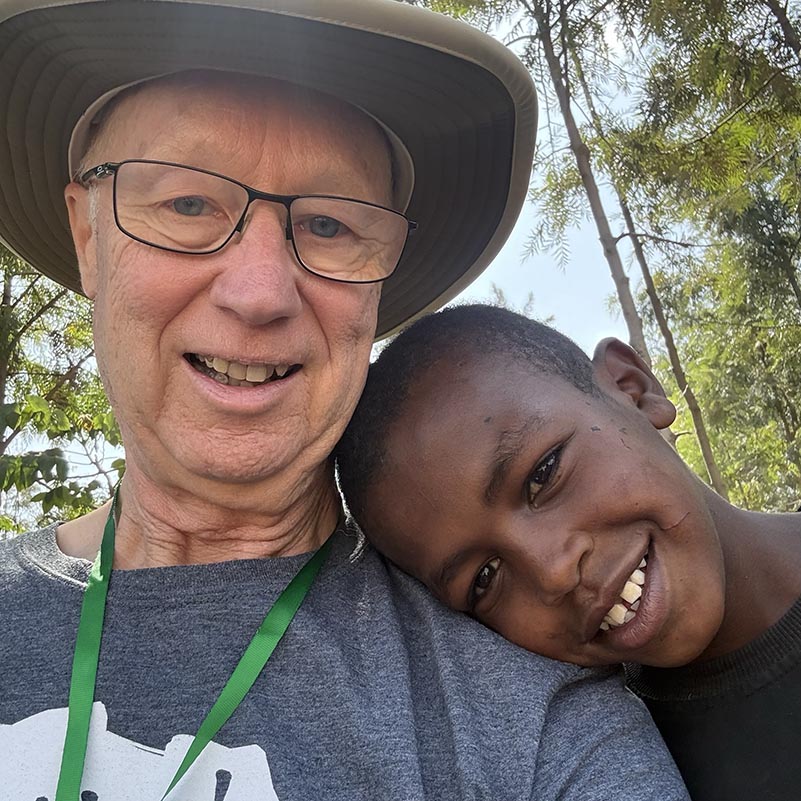
If you have gone on a trip to one of our CarePoints, you'll know this feeling. Before you have taken more than a few steps, small hands reach for yours, and smiles greet you all around. In that moment, children you have only known from a distance feel like family.
This July, that moment came again for Brian Brown. The retired lawyer, husband, and father of two sons from Austin, Texas, was back at the Gofa Sefer CarePoint in Shashemene, Ethiopia. The children he had watched grow up gathered around him.
But for the first time, he made the journey without his wife, Leah.
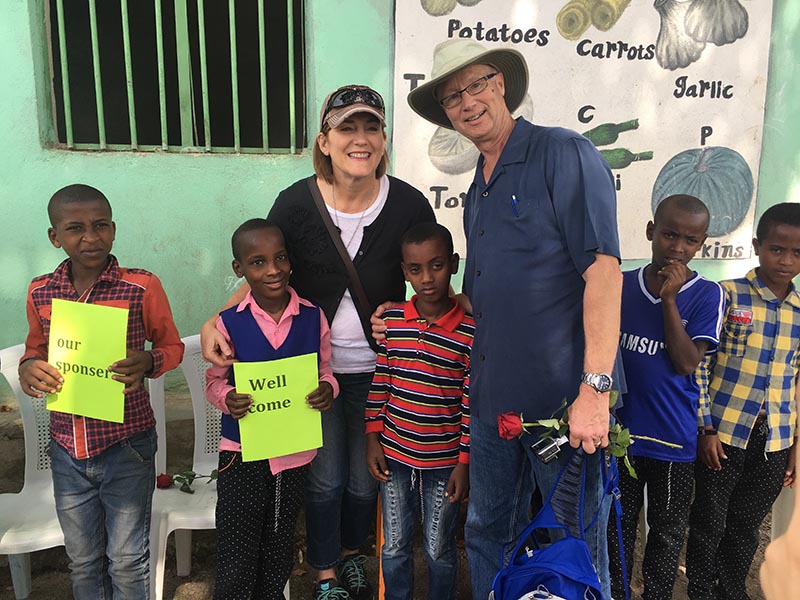
The two of them first traveled to Ethiopia in 2016 on a trip with some members from their church, Bannockburn Baptist. They initially had their doubts, but Leah ultimately encouraged them to go. A year later, they and two other couples began supporting the Gofa Sefer CarePoint through HopeChest.
They flew back every year after that.
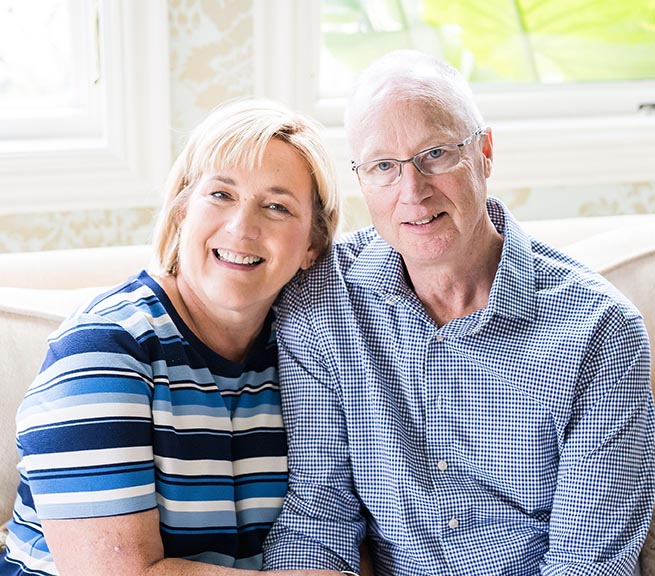
Then, in 2019, Brian and Leah discovered she had early-onset Alzheimer’s. By the time Brian returned to Ethiopia this year, he had spent years caring for her at home and made the difficult decision to move her into a memory care facility.
It was a step neither of them ever expected to take.
“I always thought, well, maybe another year or two, and I kept putting it off,” he said. “God fortunately made it a fairly easy transition for her.”
For years, much of Brian’s life centered on caring for Leah. When that season changed, he found himself asking what God still had for him and where he fit now.
“I’m learning how to do some of those things without her by my side,” he said.
The Long Goodbye
Brian’s eyes still twinkle as he talks about Leah, even when his voice catches. They will celebrate 44 years of marriage this December.
Leah was a singer and spent about 20 years working in their church’s music ministry. She can’t say much anymore, but she still responds to music when Brian visits each day.
“When I play music, particularly hymns, she connects with that,” he said. “She’s still singing along to the hymns. Music is still a large part of our connection.”
For a time, they continued traveling together. Then COVID and unrest in Ethiopia halted those trips. In the years that followed, Leah’s disease continued to progress.
“It’s often referred to as the long goodbye,” he said, “because it’s a gradual losing of the person you love. The bits and pieces of their personality or their capabilities vanish, little bit by little bit. You have one loss after another, and you have to take over responsibility for everything they did.”
Brian took over the cooking and grocery shopping. Their social world grew smaller as Leah found it harder to be around people, and he found himself wrestling with difficult questions.
“I didn’t lose my faith,” he said. “But there are times when you question the Lord. Why would God allow something so terrible, something that’s basically untreatable and terminal?”
Still, Brian never carried the burden alone.
“God always supplied friends to help carry the load,” he said, “and to remind me that she, in particular, and me were not forgotten. A lot of people go through this, and everyone abandons them. I didn’t experience that.”
As the disease progressed, caring for Leah at home became increasingly difficult. Brian helped her shower and get dressed, and he could never leave her alone. Eventually, his sons sat him down. It was time, they told him, and they were worried about him.
“It’s a very difficult and lonely process,” he said. “People that haven’t dealt with a spouse or a parent with dementia, it’s hard to understand the burden of caring for someone like that.”
With Leah safe and well cared for, Brian began stepping back into parts of life he had set aside. When his community planned a trip back to Ethiopia, he decided to go.
Going Back
At the CarePoint, Brian saw the children he had known for years. Many were preparing to graduate from high school, go to college, or learn trades like computer repair and mechanics.
“To see that the HopeChest model isn’t just words on a paper, but it’s actually transforming lives,” he said. “We’ve been able to see it from when they were small. Now they’re just flourishing in so many ways.”
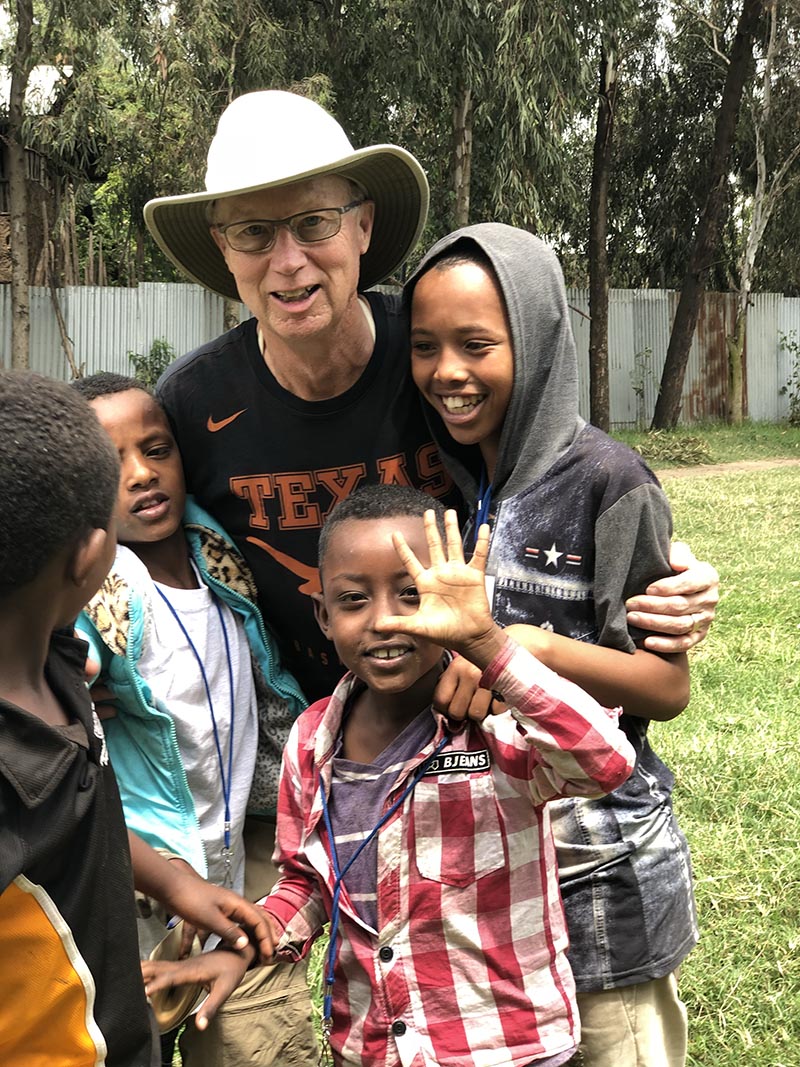
As he spent time with families, Brian could also see the changes taking place beyond the children. Parents who had long wanted to provide more for their families were finding new ways to support their households and invest in their futures.
It wasn’t the kind of transformation Brian had imagined when he first traveled to Ethiopia nearly a decade ago.
“I think we started out thinking, well, we can come, and we can save them, so to speak,” he said. “And we were so wrong about that. We contribute materially and financially, and that is important. But with HopeChest’s model, we’re coming alongside them, not just for a year or two to get them on their feet, but for the long haul.”
Yet what surprised him most wasn’t what he witnessed in the community.
It was how it felt to be back.
On the trip, Brian reunited with the other couples from Bannockburn who had continued investing time in the partnership while he cared for Leah. He also spent time with HopeChest staff members he now considers close friends.
“It was a refreshing blessing to be back on the team,” he said. “I had lost some of that, and so I was able to reconnect.”
That sense of connection didn’t end when the trip was over.
In September, Brian traveled to HopeChest’s Global Partners Conference in Colorado Springs. He went hoping to feel like he belonged somewhere again, and he did, surrounded by friends across the HopeChest family.
Looking back, Brian reflects on those years with humility.
“We’re nothing special,” he said. “We just were available, and God was able to use us.”
“From where we started to where we’ll be, they will have experienced the dignity that God made them to have. For us to be a part of empowering them, equipping them, to be all that God created them to be, that’s just a tremendous honor.”
Brian Brown
Finding Purpose Again
All of it reminded Brian that he still had a place in God’s work.
“I don’t think, as Christians, we can be fulfilled if we’re not part of God’s mission,” he said. “For a lot of time, my mission was taking care of my wife. But that’s not the same as being part of the body and ministering to others.”
In Ethiopia, he found that again.
“Opening myself up to love somebody in a completely different culture, and then to experience receiving love back, is really eye-opening,” he said. “You can hear that we’re all one in Christ. But then to actually see it working, to experience that, has been awesome.”
Among the people of Shashemene, Brian discovered that the relationships he had invested in for years were continuing to sustain him as well.
“I’d been so concentrated on my little world, with my wife and myself,” Brian said. “I was able to experience helping others and being helped by others.”
Back home in Austin, Brian is already thinking about what comes next.
“From where we started to where we’ll be, they will have experienced the dignity that God made them to have,” he said. “For us to be a part of empowering them, equipping them, to be all that God created them to be, that’s just a tremendous honor.”
Leah can’t make the trip with him anymore, but Brian is carrying on the work she first said yes to.
“To be able to reconnect with that through HopeChest has been to experience that God is faithful, and God never left,” Brian said. “God still has use for me.”